
Your shopping cart is empty!
Blog
Denita Tizard
A reflection on the messy beauty of the creative process.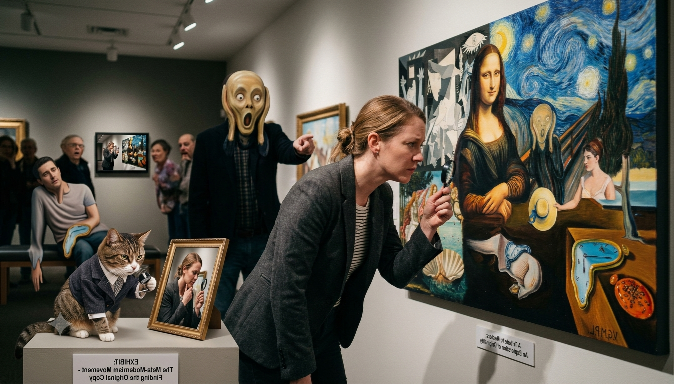
When I first entered the art world in 2002, I imagined artists sitting before a blank canvas, channelling entirely novel ideas out of thin air. The reality is far more collaborative. Austin Kleon nailed it in Steal Like an Artist: creativity isn't about immaculate conception; it’s about collecting influences, running them through your unique personal filter, and distilling them into something new. Writers read. Musicians listen. Designers observe. And tarot creators? They get to interpret 78 foundational archetypes that have been quietly shaping the human psyche for generations.
The Filter of Individual Experience
A few years ago, I took a class on deck creation. The tutor’s first assignment? Trace an existing deck as a starting point. At the time, I was stunned. Tracing? Really? Yet, for many, muscle memory is how learning begins. The friction arises when an artist forgets to add enough of themselves before sharing the final product with the world.
The real question isn't 'Is this 100% original?' It’s: 'What have you done with the inspiration?'
Lineage, Ethics, and the Great Collective Soup
There is a distinct line between being deeply inspired by a work and simply reproducing it without heart or attribution. Plagiarism is lazy copy-pasting—it skips the filter entirely. Influence, on the other hand, is eating the art you love, digesting it thoroughly, and letting it fuel the creation of a completely different body. Acknowledgement matters. Respect matters. Artists deserve credit for their labour and vision.
At the same time, we have to be realistic about creative lineage. The colours existed before us. The symbols existed before us. The archetypes existed long before us. We are all just borrowing ingredients from the great collective soup of human creativity, adding our own flavour, and serving it up.
I used to get frustrated when someone immediately replicated a technique or concept I shared. Eventually, I realised I had a choice: stay annoyed, or take it as a compliment and keep moving. I chose the latter. None of us create in a vacuum. When an idea strikes, it’s usually a lightning bolt composed of everything we’ve ever seen, felt, learnt, and remembered.
This is also why I view tools like AI not as the death of creativity, but as another medium in the studio—no different than oil paints, digital tablets, or clay. Whether you are stitching, sculpting, prompt-engineering, or painting, the medium doesn't dictate the soul of the work. Your intention, your choices, and your imagination do.
The Power of the Conscious Consumer
When two decks feature remarkably similar cards, it’s often hard to tell where direct influence ends and shared archetypal consciousness begins. It’s rarely black and white. Ultimately, the boundary is set by the person on the receiving end: the consumer. You get to decide what resonates. You get to research the process, support the artists whose ethics align with yours, and vote with your resources. That is where the real power lies—not in policing the boundaries of influence, but in consciously supporting the art that speaks to you.
Creativity is messy, overlapping, and constantly evolving. So keep creating, keep experimenting, and keep filtering the world through your own wonderful lens.
After all, imitation might be flattering—but true inspiration is where the real magic lives.
Denita Tizard
Have you ever felt like your life is moving in distinct "chapters"? Maybe you suddenly felt an itch to quit a comfortable job, found yourself in a deep quarter-life existential crisis, or realised that achieving everything you thought you wanted left you feeling completely empty inside. If so, you aren't going crazy—you’re just on a journey.
Psychologists, mythologists, and storytellers have mapped out these major shifts for centuries. When you look at diagrams of The Hero’s Journey, The Heroine’s Journey, and The Fool’s Journey, they might look like complex visual maps filled with charts, circles, and jargon. But at their core, they are all telling the exact same story: the process of human growth.
Here is a beginner-friendly guide to understanding these maps and why they matter for your own life.
1. The Big Picture: Life Moves in Circles (and Spirals)
Most maps of personal growth aren't drawn as straight lines from Point A to Point B. They are drawn as wheels or spirals. Why? Because growth is cyclical. You don't just "arrive" and stay there forever. You step out into the world, face challenges, transform, come back wiser, and eventually start a new loop when you're ready for the next level of growth.
Every single one of these journeys follows a universal four-stage rhythm:
- THE SAFE WORLD (Comfortable, familiar, innocent)
- THE DESCENT (Obstacles, chaos, new wisdom)
- THE TURNING POINT (Letting go of the old self)
- THE RETURN (Rebuilding with hard truths)
2. The Great Divide: Above the Line vs. Below the Line
Look across these frameworks, and you’ll notice a horizontal line running right through the center.
This line splits your life into two distinct psychological worlds:
- Above the Line (The Known / External World): This is your everyday life. It’s visible, conscious, and action-oriented. It’s about building a career, helping others, achieving goals, and fitting into society.
- Below the Line (The Unknown / Internal World): This is your inner life. It’s about emotions, shadow work, mental health, reflection, and quiet solitude.
The Traps We Fall Into:
- Living only Above the Line makes life feel shallow or burnout-inducing. You achieve goals, but you feel disconnected from who you really are.
- Living only Below the Line can lead to isolation or getting stuck in your head without ever taking action in the real world.
The Golden Rule of the Journey: To become a complete person, you have to cross below the line, do the internal work, and then cross back above to live out what you learned.
3. Comparing the Three Major Journeys
While all three frameworks share a common structure, each highlights a different aspect of the human experience.
- The Hero’s Journey (Joseph Campbell) - What must I overcome? Conquering external challenges. It’s about leaving your comfort zone, fighting your dragons, finding a mentor, and bringing a prize home to help your community.
- The Heroine’s Journey (Maureen Murdock) - Who am I behind the mask? Healing internal division. It’s about reclaiming parts of yourself you hid away to fit into the world, balancing ambition with rest, and finding self-worth.
- The Fool’s Journey (Tarot Archetypes) - How do I evolve spiritually? The full arc of human maturity. Starting as the innocent "Fool" (Step 0) and traveling through life's archetypal lessons until reaching completeness in "The World" (Step 21).
4. The Magic in the Middle: The Crucible of Rebirth
Every map has a moment right at the bottom center of the circle. In story terms, this is the "abyss" or "dark night of the soul." In Tarot, it’s represented by The Hanged Man and Death. It sounds intimidating, but it's actually the most important step on the map.
This bottom point represents surrender. It’s the moment you realise that the old tactics, old beliefs, or old habits that got you here won't get you there. To move forward into true transformation, a part of your old identity has to die so your authentic self can be born.
How to Use These Maps in Your Real Life
You don't need to memorise the individual steps to benefit from these frameworks.
Simply ask yourself where you currently sit on the wheel:
- Are you in Stage 1 - Feeling comfortable, but sensing a quiet call for change?
- Are you in Stage 2 - Facing trials, struggling with identity, or feeling lost in the woods?
- Are you in Stage 3 - Standing at a crossroads where you need to let go of an old belief or habit?
- Are you in Stage 4 - Coming out of a tough season with fresh perspective and ready to rebuild?
Knowing where you are on the map doesn't erase the difficulty of the journey, but it gives you perspective. It reminds you that feeling lost isn't a dead end—it’s just the middle of the story.
The Journey Continues
The beautiful thing about these journeys is that there is no perfect point at which you finally “arrive”. Life keeps moving, and so do we.
There will be times when you feel like the Fool, stepping into something completely unknown. Times when you feel like the Hero, facing challenges that ask you to find your courage. And times when you need the deeper healing of the Heroine’s Journey — turning inward, reclaiming the parts of yourself you have lost along the way. You may travel these paths many times throughout your life, and each time you return, you bring a little more wisdom with you.
So if you find yourself standing at a crossroads, feeling lost, restless, or ready for something to change, perhaps you don't need to have the whole journey figured out.
You simply need to ask:
- Where am I on the journey right now?
- What is this chapter asking me to learn?
- And what am I ready to leave behind so I can step into what comes next?
The map doesn't tell you exactly where you'll end up. It simply reminds you that there is always another chapter waiting to unfold.
Denita Tizard

If you’ve been in the spiritual or self-development space for more than five minutes, you’ve heard the term shadow work. It can sound intimidating, exhausting, or even a bit dramatic. But at its core, shadow work isn't about wallowing in pain or hunting for flaws—it’s simply the process of looking at the parts of ourselves and our history that we’ve hidden away in the basement, and bringing them back into the light.
In today’s reading, I was reminded of why this process is so vital, and why trying to build a "positive" life without doing the shadow work is like trying to build a house on an unexamined foundation.
The Heavy Stuff: Why Dismantling Is Necessary
When I pulled my cards today, these came out right away: The Emperor, The Empress, The Tower, and the Nine of Swords.
This is the quintessential shadow territory. The Emperor and Empress for me represented the rigid structures, old family rules, authority patterns, and generational ways we were taught to navigate the world. The Nine of Swords is that familiar 3:00 AM anxiety—the sleepless nights caused by the stories and fears we keep running in our heads.
For a long time, we try to maintain control by doubling down on those Emperor structures. But eventually, The Tower shows up.
Shadow work is important because if we don't consciously choose to dismantle the beliefs that keep us in the Nine of Swords, life will eventually dismantle them for us. Tower moments feel scary while they’re happening, but they are actually acts of mercy. They tear down the false armor so we can finally stop living in a constant state of defense.
The Shift: Looking Through a Different Lens
So, how do we step out of that storm? Today, The Hanged Man and The Wheel of Fortune made an appearance, reminding me that shadow work requires a deliberate pause and a complete shift in perspective.
When you suspend your usual way of thinking (The Hanged Man), you start to realise that your past doesn't have to be a static sentence. Circumstances shift, and life moves in cycles (The Wheel). Shadow work gives you the space to ask: "Is the story I've been telling myself about my past the ONLY truth, or just the one I got used to repeating?"
Reclaiming the Full Truth: Memory & Balance
This brings me to the softer side of the reading: the Six of Pentacles and the Six of Cups.
This was the biggest eye-opener for me today. Often, people think shadow work is only about facing trauma. But true shadow work is about balance. When we are trapped in hyper-vigilance, our brains filter out the good moments from our past to keep us on guard.
Pulling the Sixes showed me that shadow work also involves reclaiming the lost warmth, the simple acts of generosity, and the sweet, nostalgic memories from younger years that got buried under the heavy stuff. Shadow work doesn't just reveal what went wrong; it restores the light you forgot you had access to.
The Breakthrough: Wings You Couldn't Imagine
To cap off the reading, I pulled the Four of Wands, the Four of Pentacles, and my theme oracle card for the session—the Dragonfly.
The Dragonfly is such a perfect teacher for shadow work. A dragonfly spends up to four years living underwater as a nymph in the dark, murky mud. While it’s down there, it has no concept that it will ever fly. It doesn't even know what wings are. Yet, it doesn't disown its time underwater; that dark environment is where it grew the strength to eventually rise.
Looking at the Four of Wands and Four of Pentacles, I realised something powerful: the security, peace, stability, and joy I have built in my life today are things my younger self in the "underwater years" couldn't have even imagined.
Final Thoughts
Shadow work isn't about declaring your past "bad" or pretending it didn't happen. It’s about recognising that you don't have to live beneath the surface anymore. You dismantle the old structures not to destroy yourself, but to make room for a foundation that can actually hold the flight you're meant for.
Next Steps: If you're ready to explore your own integration process, download the free Shadow & Balance 8-Card Tarot Spread.
Denita Tizard

The more I talk with people about reading, the more I hear the same gentle confession: “I want to read more, but it doesn’t feel as easy as it used to.”
Life is louder now. Our attention is pulled in so many directions, and the quiet space that reading once filled can feel harder to reach.
That is why I created this little reading ritual — not as another thing to do, but as a gentle reminder of how special reading can be. A book is more than words on a page; it is a place to rest, to dream, to learn, and to return to yourself for a while.
I hope this ritual helps you slow down, set the world aside for a few precious minutes, and rediscover the simple magic of opening a book and disappearing into a story.
A Little Reading Ritual
Gather what you need: a book, a cosy blanket, a warm drink, and perhaps the glow of a candle or a gentle lamp. Settle into your favourite chair, or find a quiet spot by a window where the light feels kind.
Before you begin, take three slow breaths. Let your shoulders soften. Allow the busyness of the day to drift a little further away with each exhale.
Hold your book for a moment and quietly say: "For the next little while, I choose stories over scrolling, imagination over distraction, and peace over pressure."
Now place your phone on silent and give yourself permission to be unavailable for a little while. Let this be a small pocket of time that belongs only to you.
Then open your book and simply read.
There is no need to finish a chapter or meet a goal. Even ten quiet minutes can be enough to soothe the mind and nourish the spirit.
When you are ready to stop, close your book gently and notice how you feel.
Reading is not another task to complete. It is a gentle invitation to rest, to wander, to imagine, and to spend time somewhere other than a screen.
May every page bring you a little more calm, a little more curiosity, and a little more joy.
Good Reads
One habit that has deepened my reading life is using Goodreads. I now write a short review for every book I finish. It doesn’t have to be clever or perfect; it’s simply a way of honouring the time I’ve spent reading and the years an author may have spent creating that book.
My memory isn’t as sharp as it used to be, so those little reviews have become a gift to my future self. When I look back through my Goodreads shelves, I’m not just reminded of the plot — I remember how the book made me feel, what I was thinking at the time, and why it mattered to me. A few sentences written today can bring an entire reading experience back to life months or even years later.
For me, Goodreads has become less about rating books and more about keeping a gentle record of my reading journey. It’s like a diary made of stories.
I use both the app on my phone and website www.goodreads.com you can add me as a friend on there by CLICKING HERE
Denita Tizard
The remarkable true story of Henry Harrod, Harrodsville, and the legal battle that captured New Zealand’s heart.
This week I had the honour of sharing my grandad Henry's story on Seven Sharp. Thank you to Erin and the Seven Sharp team for giving me the opportunity to honour his memory.
Some family stories become legends. This is one of ours.
When I was eleven years old, my grandfather, Henry Harrod, found himself in a legal battle with one of the most famous department stores in the world—Harrods of London. At the time, I didn't understand much of what was happening. I just knew there were newspaper reporters, lawyers' letters, and worried conversations between the adults. Looking back now, I realise how much the whole ordeal weighed on Grandad's shoulders.
Before all of that, he had already built something extraordinary. Grandad and his wife transformed an old girls’ home on Margaret Street in Palmerston North into a beautiful restaurant they called 'Harrods'. It was never just a place to eat; it became a destination where countless celebrations were shared. The gardens were stunning, weddings were held there, and in time motel units were added to the property. It became a place filled with laughter, milestones, and treasured memories for many people.
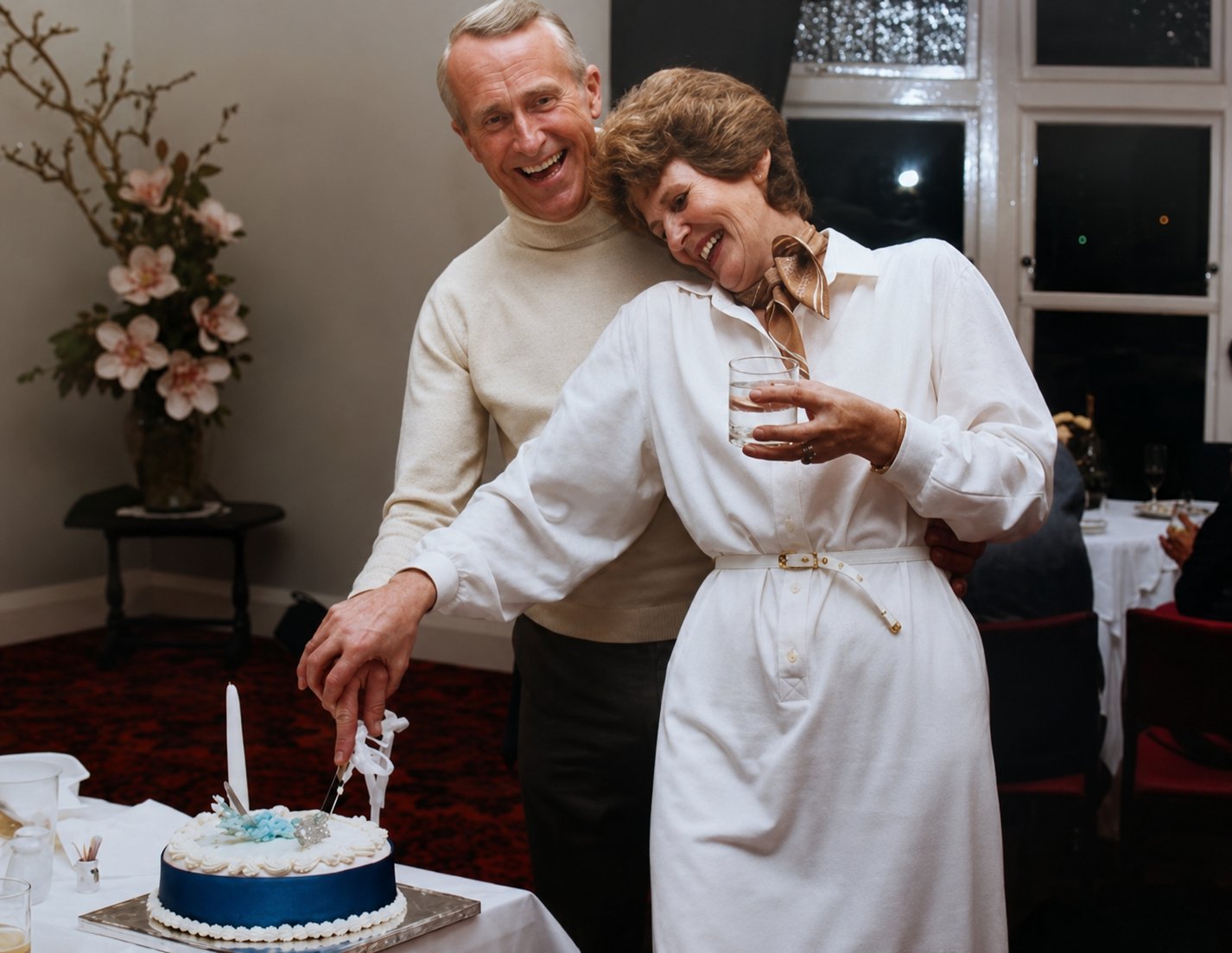
Here is a photo of Henry and Brenda on one of those special evenings, celebrating their wedding anniversary and the love they shared.
Some of my happiest childhood memories are from that place. I remember Grandad teaching me to ballroom dance. I remember the wonderful staff, who always made me feel welcome. I remember wandering through the restaurant and kitchen into the staff room, where Grandad would grin and ask if I wanted some licorice. It was his favourite, but with his mischievous sense of humour you were never quite sure what you were being offered real or fake licorice.
Then everything changed. In court, Harrods of London argued that people might believe there was a connection between the two businesses. What followed was, from what I remember and what I’ve since read on how far a famous brand’s reputation can stretch.
For a small family business in New Zealand, taking on one of the world's most famous retailers was overwhelming. The newspaper articles tell the legal story, but they don't tell the emotional one. They don't show what it feels like when your own surname suddenly becomes something you have to defend.
Then New Zealand stepped in. People across the country saw Grandad as the underdog. They believed a local businessman was being bullied by a global corporation. In one of the most wonderfully Kiwi responses imaginable, the town of Otorohanga temporarily renamed itself Harrodsville. Businesses changed their signs in support of my grandfather, transforming a legal dispute into a nationwide statement of solidarity.
It was more than a protest; it was a community saying, “We’re with you."
Although the legal battle came to an end, I think something else ended too. Grandad had poured his heart into that restaurant, and after years of stress, it just wasn't the same. In time, he sold the business and started a new chapter. Life moved on, as it always does, but the story of Harrods remained part of our family history.
Then, around twenty years later, something rather lovely happened. My auntie Lyn bought Grandad a ticket to London, and he finally visited the famous Harrods department store—the very place that had caused him so much stress all those years earlier. What had once been a source of worry became, in the end, a place he could see with his own eyes.
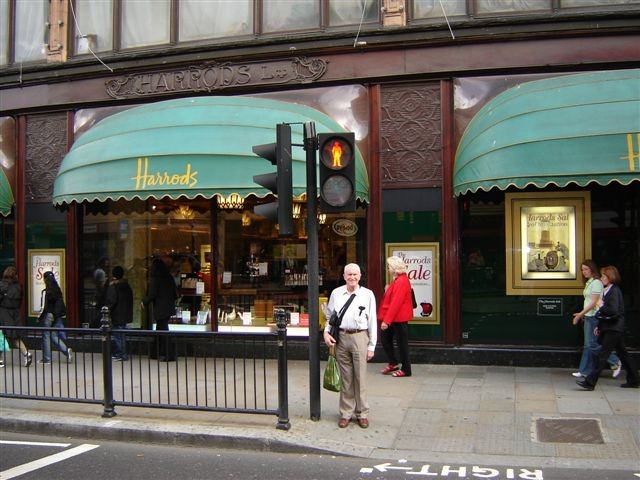
I've always imagined there was something healing about that visit. Perhaps he looked around and smiled. Perhaps he realised life was too short to carry old battles forever.
Today, if you look through the history of Harrods, you'll even find a small mention of my grandfather on the wikipedia page. His story became part of the history of one of the world's most famous stores.
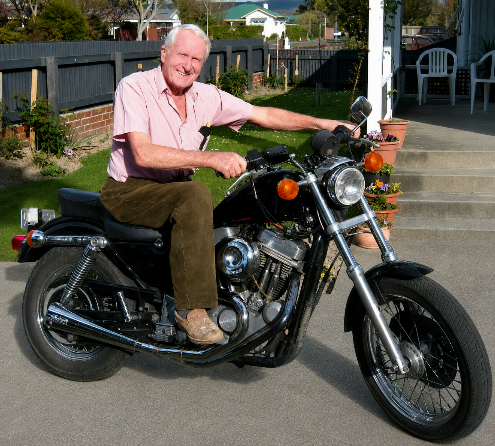
But that's not how I remember him. I remember the man who taught me to dance and many other wonderful life and work ethics. I remember the beautiful gardens, the celebrations, the laughter, the smell of the restaurant, and the cheeky grin as he offered me "licorice." Those are the memories that matter. The court case made headlines. Henry Harrod made memories. And for me, that's the legacy worth remembering.
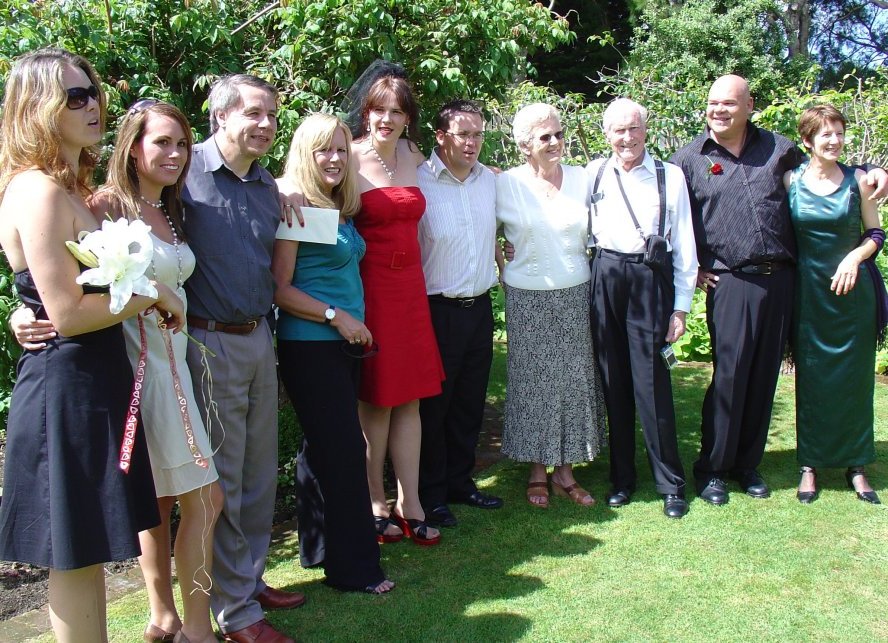
This photo below is one of the last photographs of the Harrod family together, except for my Dad, taken at our wedding in 2007. After Grandad’s cancer diagnosis, we didn’t know if he would make it to our wedding, but he stubbornly held on so he could share that day with us. I will always be grateful that he was there. Sadly, he passed away a few weeks later.
As I’ve grown older, I’ve realised that Grandad left me with another lesson, one that had nothing to do with restaurants or court cases. He taught me that not every fight is worth fighting.
Years later, I unintentionally used the name of a well-known trademarked essential oil blend. When the company contacted me, I simply said, “That’s okay, I’ll change it.” I had seen what years of legal stress could do to a person, and I knew I didn’t want that in my life.
Grandad’s story taught me that protecting your wellbeing, your joy, and the life you are trying to build can sometimes be the bravest choice of all.
These days, I would rather spend my energy creating a good life than fighting battles that cannot give me back what has already been lost.
Love you Grandad x
Denita Tizard
This week brings a rare and beautiful meeting of energies. The Aquarius Full Moon illuminates what's ready to be released, while Imbolc — the first quiet stirring of spring in the Southern Hemisphere — invites us to nurture what is just beginning to awaken.
Aquarius asks: What am I ready to free myself from so I can live more truthfully?
Imbolc asks: What small spark of hope, creativity, or healing is ready to grow?
Together, they form a threshold — between letting go and calling in.
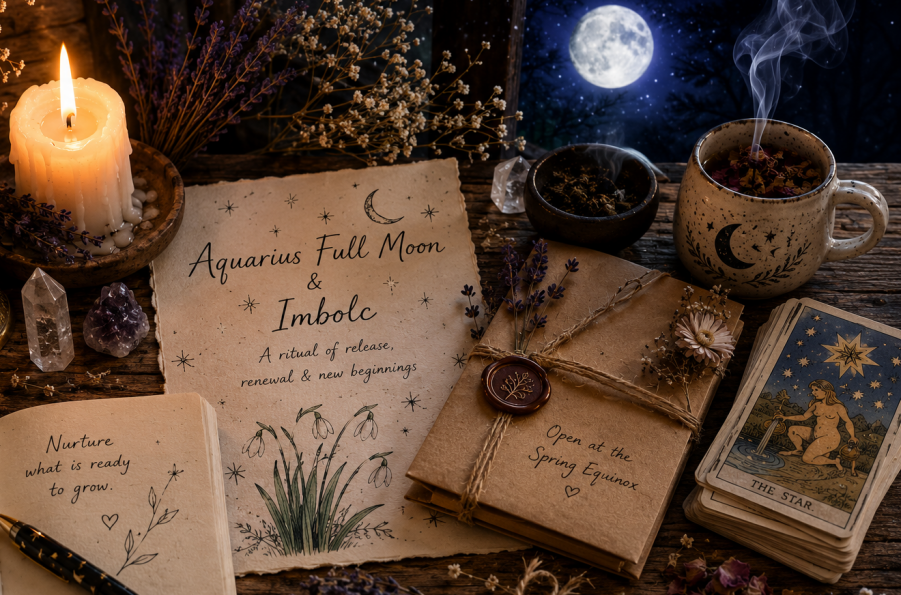
What You'll Need
A white candle
Incense, herbs, or a bell for cleansing
Two small pieces of paper
A small envelope
A pen
Optional: dried flowers, herbs, ribbon, or a tiny crystal
A tarot or oracle deck
A cup of herbal tea or cacao for closing
Cleanse Your Space
Light the candle and take a slow breath. Cleanse your space with smoke, sound, or intention.
Say: As the light returns, I welcome clarity, courage, and new beginnings.
May this space be filled with peace, inspiration, and the gentle promise of spring.
Let the flame be both moonlight and hearth-light — illumination and warmth.
July 2026 Full Moon Meditation | Full Chakra Cleanse from The Psychic Soul Guided Meditations
This July 2026 Full Moon Meditation is an Aquarius guided meditation and chakra healing meditation for a full chakra cleanse. Join Crystal Heinemann of The Psychic Soul to balance all 7 chakras under the light of the full moon. In this Root-to-Crown Chakra meditation, the Aquarius water bearer blends water and air alchemy to help you release non beneficial energy, cleanse your chakras and aura, calm your nervous system, and restore your natural flow. Tibetan singing bowls and tuning forks create a gentle field of sound throughout your practice. Headphones are recommended so you can receive the full experience.
https://www.youtube.com/watch?v=QliEpKP9yWo
Full Moon Release
On the first piece of paper, write what you're ready to release: old fears, habits, limiting beliefs, self-doubt, or anything that no longer aligns with your path.
Fold the paper. Burn it safely, or tear it into small pieces.
Say: Under the Aquarius Moon, I release what has completed its purpose.
I free myself from what keeps me small, and I make space for truth, freedom, and authenticity.
Let the moonlight carry those burdens away.
The Imbolc Seed Envelope
On the second piece of paper, answer:
- What do I want to grow this spring?
- What inspires me right now?
- What's one small step I can take this week?
Place the paper inside the envelope. Add any symbolic items you wish — a pressed flower for growth, lavender for peace, rosemary for clarity, a bay leaf with a wish, or a tiny crystal.
Write on the front: To the person I am becoming or Open at the Spring Equinox
Hold the envelope and say: I welcome the first light of what is becoming.
May this seed grow with patience, courage, and love.
Place it somewhere you'll see often. Open it at the Spring Equinox and notice what has begun to grow.
Aquarius Full Moon & Imbolc Tarot Spread
Lay the cards left to right, moving from release into renewal:
- What am I ready to release?
- What pattern or belief has kept me small?
- What wisdom has this experience given me?
- What light is returning to my life?
- What seed is ready to be planted?
- How can I nurture this in the coming weeks?
- What blessing may emerge if I trust this journey?
Let the cards tell their story then journal a few words for each card.
Closing Blessing
Hold your hands over the candle.
I release what has completed its purpose.
I welcome the first light of new possibilities.
Like the earth awakening beneath the soil, I trust that what I nurture with love and intention will grow.
May I walk forward with courage, wisdom, and an open heart.
May the returning light guide my steps, and may my spirit remember its own radiant truth.
So it is.
Finish with Gratitude
Pour a cup of tea or cacao. Sip slowly, and let yourself receive the energy of the moment.
Before extinguishing the candle, whisper one word you wish to carry into spring.
Carry the energy of this ritual with you in the days ahead. Notice the signs, the synchronicities, and the quiet invitations to begin again. You do not need to rush the unfolding of spring; every blossom starts as a hidden seed.
Blessed Full Moon. Blessed Imbolc. Blessed be.