Your shopping cart is empty!
Blog
Is Anything Ever Truly Original?
Denita Tizard
A reflection on the messy beauty of the creative process.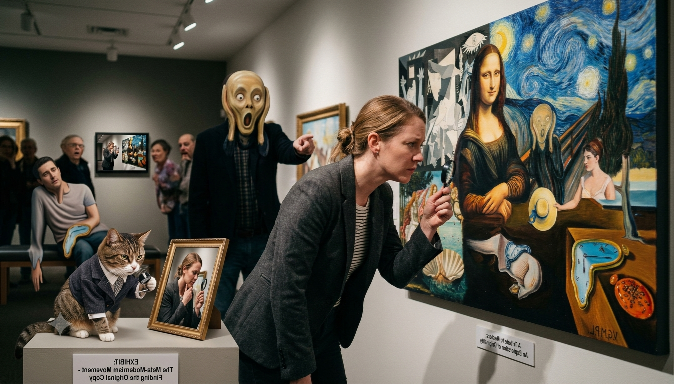
When I first entered the art world in 2002, I imagined artists sitting before a blank canvas, channelling entirely novel ideas out of thin air. The reality is far more collaborative. Austin Kleon nailed it in Steal Like an Artist: creativity isn't about immaculate conception; it’s about collecting influences, running them through your unique personal filter, and distilling them into something new. Writers read. Musicians listen. Designers observe. And tarot creators? They get to interpret 78 foundational archetypes that have been quietly shaping the human psyche for generations.
The Filter of Individual Experience
A few years ago, I took a class on deck creation. The tutor’s first assignment? Trace an existing deck as a starting point. At the time, I was stunned. Tracing? Really? Yet, for many, muscle memory is how learning begins. The friction arises when an artist forgets to add enough of themselves before sharing the final product with the world.
The real question isn't 'Is this 100% original?' It’s: 'What have you done with the inspiration?'
Lineage, Ethics, and the Great Collective Soup
There is a distinct line between being deeply inspired by a work and simply reproducing it without heart or attribution. Plagiarism is lazy copy-pasting—it skips the filter entirely. Influence, on the other hand, is eating the art you love, digesting it thoroughly, and letting it fuel the creation of a completely different body. Acknowledgement matters. Respect matters. Artists deserve credit for their labour and vision.
At the same time, we have to be realistic about creative lineage. The colours existed before us. The symbols existed before us. The archetypes existed long before us. We are all just borrowing ingredients from the great collective soup of human creativity, adding our own flavour, and serving it up.
I used to get frustrated when someone immediately replicated a technique or concept I shared. Eventually, I realised I had a choice: stay annoyed, or take it as a compliment and keep moving. I chose the latter. None of us create in a vacuum. When an idea strikes, it’s usually a lightning bolt composed of everything we’ve ever seen, felt, learnt, and remembered.
This is also why I view tools like AI not as the death of creativity, but as another medium in the studio—no different than oil paints, digital tablets, or clay. Whether you are stitching, sculpting, prompt-engineering, or painting, the medium doesn't dictate the soul of the work. Your intention, your choices, and your imagination do.
The Power of the Conscious Consumer
When two decks feature remarkably similar cards, it’s often hard to tell where direct influence ends and shared archetypal consciousness begins. It’s rarely black and white. Ultimately, the boundary is set by the person on the receiving end: the consumer. You get to decide what resonates. You get to research the process, support the artists whose ethics align with yours, and vote with your resources. That is where the real power lies—not in policing the boundaries of influence, but in consciously supporting the art that speaks to you.
Creativity is messy, overlapping, and constantly evolving. So keep creating, keep experimenting, and keep filtering the world through your own wonderful lens.
After all, imitation might be flattering—but true inspiration is where the real magic lives.